 Skip to content
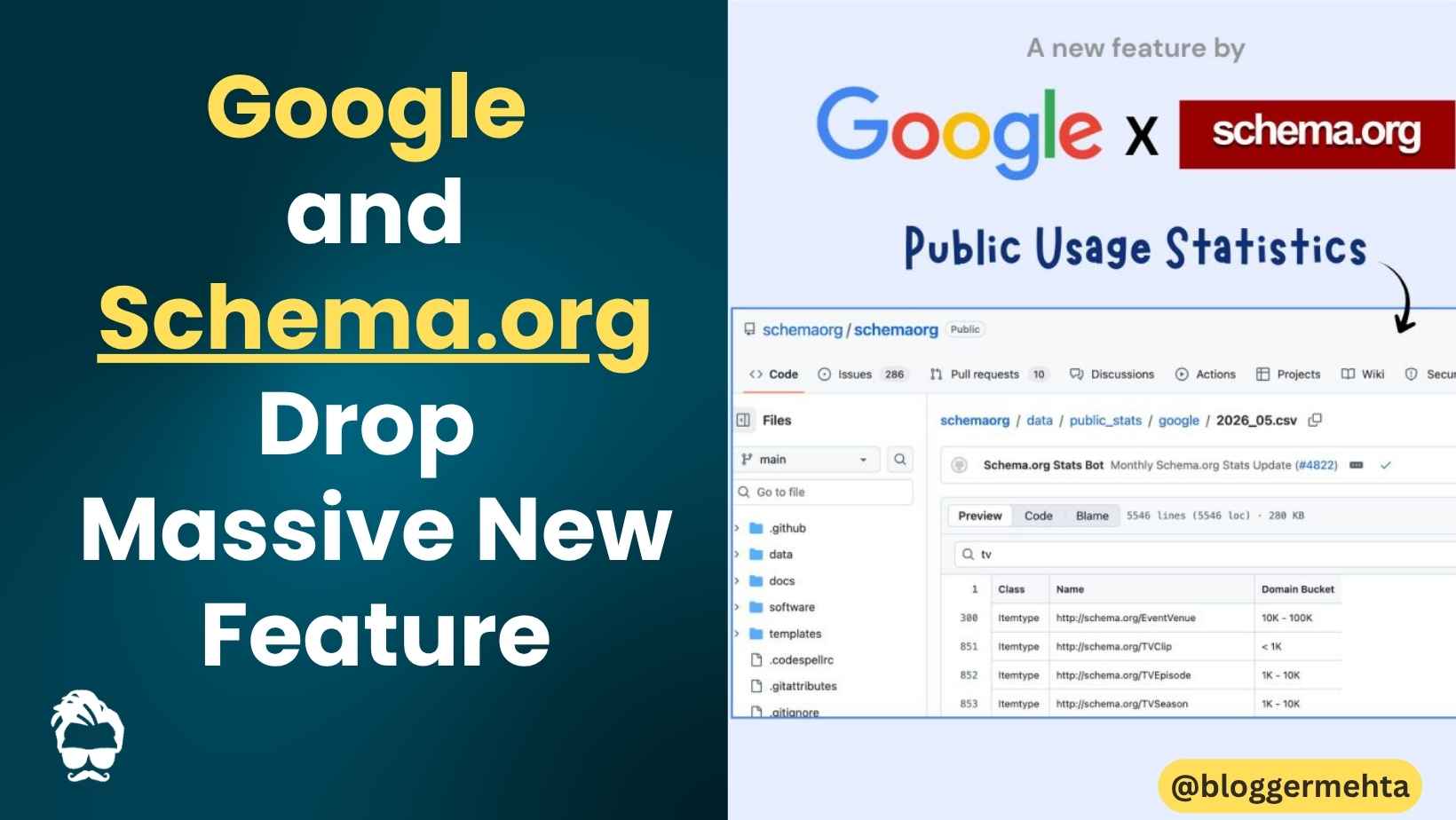
It’s always a good feeling when the guesswork gets taken out of SEO. On June 4, 2026, Schema.org and Google did exactly that. They’ve officially launched a massive new feature: the Public Usage Statistics Dataset. It’s a free, monthly-updated dataset that reveals exactly how many websites are using each Schema.org tag (Types and Properties) across the internet. No more guessing; we now have the data.
🕵️ What is the Public Usage Statistics Dataset?
Think of this new dataset as the “Popularity Index” for structured data. For the first time, we can see which schema terms (like “Product”, “Recipe”, or “Event”) are actually being adopted by millions of websites. The data, which comes from Google’s own crawl of the public web, is available in both CSV and JSON formats on the official and will be updated monthly.
To provide stability and protect privacy, the data is presented in aggregated “buckets” (e.g., “1M – 10M domains”) rather than exact numbers, but the information is incredibly clear. You can see the usage trends directly on term pages as well.
Also Read: AI Could Start Building Its Own Successors, Anthropic Issues Stark Warning
📈 What Does the May 2026 Data Show Us?
The first release gives us a fascinating look at the structured data landscape. Here are a few key takeaways from the initial dataset:
- The Most Popular Types: Some terms are practically everywhere. In the first release, 12 Itemtypes (like
Organization,Person,WebPage,BreadcrumbList, andImageObject) were found on over 10 million domains. These are the absolute bedrock of schema markup. - Strong Mid-Tier Adoption: Another 35 Itemtypes, including
Product,Review,Article,FAQPage, andLocalBusiness, are used on between 1 million and 10 million domains. The presence ofFAQPageat this level underscores how Google’s rich result features drive adoption. - The Power of Core Properties: When looking at Predicates, the data shows that the most important properties are
name,description,image, andurl. These 31 properties are in the 10 million-plus bucket, making them essential for any serious implementation. - The Long Tail is Real: On the other end of the spectrum, a massive 485 Itemtypes fall into the fewer-than-1,000-domain bucket. While some of these are highly specialized and important for niche industries, it clearly shows that not all schema terms are created equal.
🚀 How Does This Benefit Us as SEOs?
This new dataset is a game-changer for how we plan and execute our structured data strategies. Here’s how it benefits us directly.
No More Guessing
For years, we’ve had to infer which Schema types were popular based on blog posts and speculation. Now, we have official, crawl-scale evidence from Google itself. You can see exactly which tags are popular and worth adding to your website, saving you time and resources.
Make Smarter, Data-Driven Choices
This data empowers you to make strategic decisions. For example, if a tag is super rare (in the “1K – 10K” bucket), it might be a perfect opportunity for you to stand out in a specific niche. Conversely, if a term is in the “Under 1K” bucket, you can confidently decide it’s not a priority for now, focusing your energy where it will have the most impact.
Get Easy Proof for Your Clients or Team
How many times have you had to justify the effort of implementing a specific schema type? Now, you can show clients or management real, hard data on what the rest of the web is actually doing. It’s an incredibly powerful way to build consensus and demonstrate the value of your work.
💡 How to Use This Dataset (A Quick SEO Workflow)
Using this new data is straightforward. Here is a simple workflow you can start using today.
| Step | Action | Why It Matters |
|---|---|---|
| 1. Start with the Core | Review the highest adoption buckets (1M+, 10M+). | These are the “must-haves” for any website. Prioritize implementing Organization, WebPage, BreadcrumbList, ImageObject, and Person. |
| 2. Check Your Niche | Search for terms specific to your industry (e.g., Product for e-commerce, Recipe for food blogs, JobPosting for career sites). | See how competitive your niche is. High adoption means you need it to compete; low adoption might offer a clear opportunity. |
| 3. Spot Opportunities | Look for high-value terms that are still in the mid-range (e.g., 10K–100K) but relevant to your content. | These are “early adopter” terms. Implementing them now could give you a significant edge before they become mainstream. |
| 4. Stop Wasting Time | Verify rarely used terms before you invest time in them. | If a term is in the “fewer than 1,000 domains” bucket, you can likely skip it unless you have a very specific, niche use case. |
The Public Usage Statistics Dataset is a milestone for transparency in the SEO world. The guesswork is over. Go check out the data, see what’s trending, and start building smarter, more effective websites today.
Google and have launched a Public Usage Statistics Dataset. It’s a free, monthly-updated resource showing the adoption of schema tags across millions of sites. This allows SEOs to make smarter, data-driven decisions, stop guessing about popular tags, and easily prove the value of their work.
Read in App ★ Free