 Skip to content
Creating content and publishing it online doesn’t automatically guarantee Google rankings. Many website owners in India struggle with poor search visibility despite having what seems like quality content.
Let’s explore the most common reasons why your pages aren’t ranking and how to fix these issues.
Contents
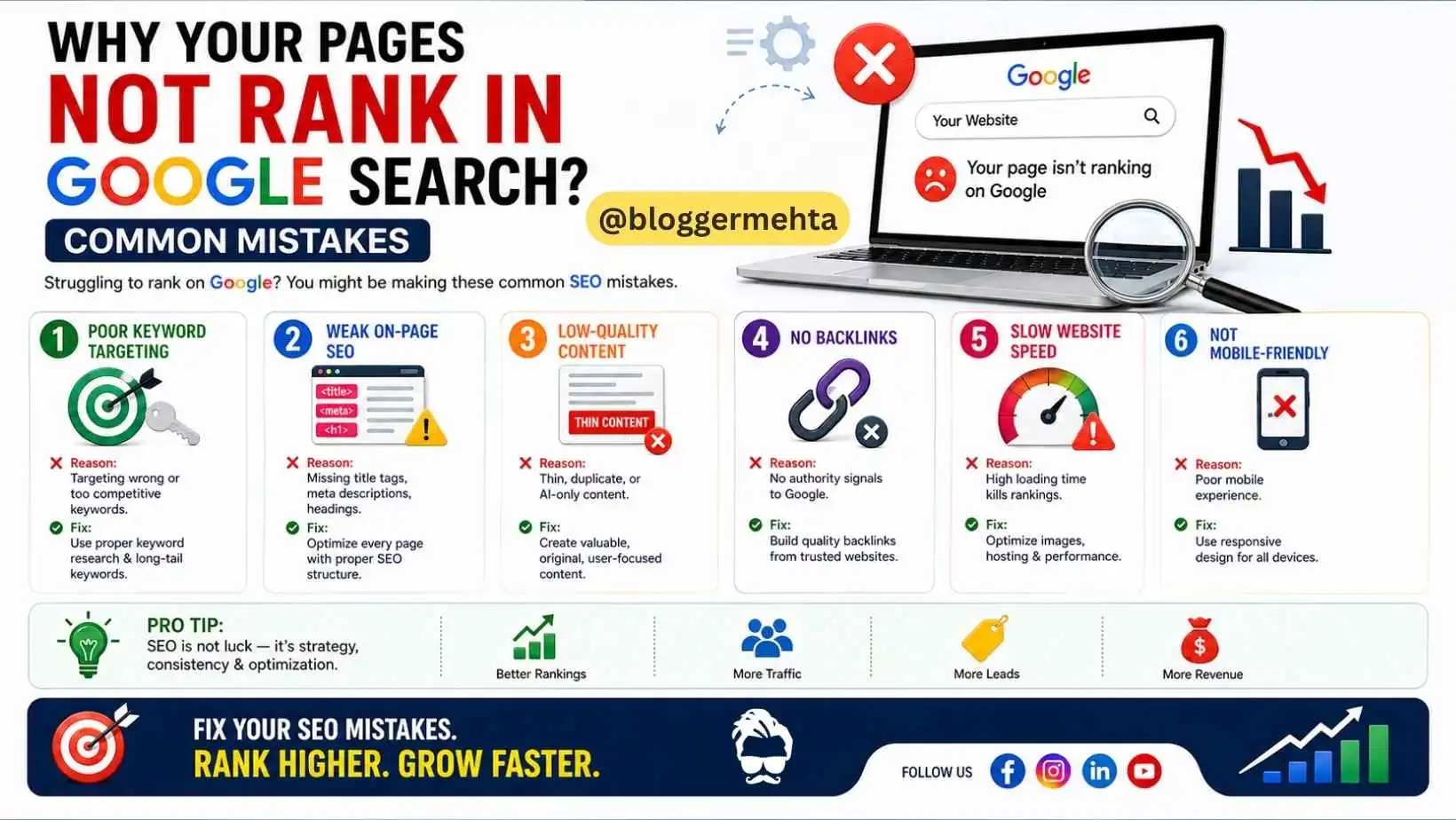
Not Ranking on Google? (Common Mistakes)
Struggling to rank on Google Search?
You might be making these common SEO mistakes 👇
1. Poor Content Quality and Relevance
Thin or Low-Value Content
One of the biggest mistakes Indian websites make is publishing content that doesn’t provide real value to users. Google prioritizes content that:
- Answers user questions comprehensively
- Solves actual problems
- Provides unique insights or perspectives
- Is well-researched and accurate
Solution: Focus on creating in-depth, valuable content that genuinely helps your target audience. Aim for at least 1000+ words for comprehensive topics.
Keyword Stuffing and Forced Optimization
Many creators stuff keywords unnaturally, making content unreadable. This approach not only hurts user experience but also triggers Google’s spam filters.
Solution: Use keywords naturally where they make sense. Focus on semantic keywords and related terms rather than exact match keywords.
2. Technical SEO Issues
Slow Page Loading Speed
Page speed is crucial for Indian users who may have varying internet speeds. Slow-loading pages hurt both user experience and search rankings.
Common Issues:
- Large image files not optimized
- Too many plugins or scripts
- Poor hosting performance
- No caching implemented
Solutions:
- Compress images (use WebP format)
- Implement caching plugins
- Minify CSS and JavaScript files
- Choose quality hosting providers
- Use Content Delivery Networks (CDNs)
Mobile-Unfriendly Design
With over 70% of searches coming from mobile devices in India, having a mobile-unfriendly site is a major ranking killer.
Issues to Check:
- Non-responsive design
- Text too small to read
- Buttons too close together
- Horizontal scrolling required
Solution: Implement responsive web design and regularly test on mobile devices.
Indexing Problems
Your content might not be indexed properly due to:
- Robots.txt blocking important pages
- Noindex tags accidentally applied
- Canonicalization issues
- XML sitemap problems
Solution: Use Google Search Console to monitor indexing status and fix crawl errors promptly.
3. Lack of Proper On-Page SEO
Missing or Poor Meta Tags
Meta titles and descriptions are crucial for both SEO and click-through rates. Common mistakes include:
- Duplicate meta titles across pages
- Meta descriptions missing keywords
- Titles too long or too short
- Not optimizing for featured snippets
Best Practices:
- Keep titles under 60 characters
- Write compelling meta descriptions (150-160 characters)
- Include primary keywords naturally
- Make descriptions actionable and appealing
Poor Internal Linking Structure
Internal linking helps Google understand your site structure and distributes page authority effectively.
Common Mistakes:
- No internal links at all
- Links pointing to irrelevant pages
- Broken internal links
- Not linking to cornerstone content
Solution: Create a logical linking structure that connects related content and guides users through topic clusters.
4. No Backlink Strategy
Absence of Quality Backlinks
Google views backlinks as votes of confidence. Without them, even excellent content struggles to rank.
Indian Context: Many Indian businesses focus only on local directories, missing broader industry opportunities.
Building Strategies:
- Guest posting on relevant Indian industry blogs
- Creating linkable assets (tools, research, infographics)
- Participating in industry forums and communities
- Building relationships with journalists and bloggers
Low-Quality or Spammy Backlinks
Acquiring poor-quality links can actually hurt your rankings through Google penalties.
Red Flags:
- Links from link farms or PBNs
- Exact match anchor text over-optimization
- Links from irrelevant or low-authority sites
- Sudden spike in backlinks
Solution: Focus on earning natural, high-quality backlinks over time.
5. Ignoring User Experience Signals
High Bounce Rates
If users quickly leave your page, Google interprets this as poor content quality or relevance.
Causes:
- Slow loading times
- Poor content organization
- Difficult navigation
- Intrusive ads or pop-ups
Improvements:
- Improve content readability with headings and bullet points
- Add internal links to keep users engaged
- Optimize for Core Web Vitals
- Reduce intrusive advertising
Poor Engagement Metrics
Low time on page, high exit rates, and minimal interaction indicate content isn’t meeting user needs.
6. Not Understanding Search Intent
Mismatched Search Intent
Creating content that doesn’t match what users actually want when searching for specific terms.
Types of Intent:
- Informational: Users seeking information
- Transactional: Users ready to buy
- Navigational: Users looking for specific websites
- Commercial Investigation: Users comparing options
Solution: Analyze top-ranking pages for your target keywords to understand the dominant search intent.
Competing with Wrong Content Types
Trying to rank informational content against commercial pages, or vice versa.
7. Neglecting Local SEO (for Local Businesses)
Missing Local Signals
Indian local businesses often miss crucial local SEO elements:
- No Google Business Profile optimization
- Missing local citations and NAP consistency
- No location-specific content
- Ignoring local keyword opportunities
Poor Review Management
Negative reviews or lack of reviews can significantly impact local rankings.
Also Read: 12 Local SEO Directories That Can Boost Your Google Rankings
8. Inadequate Content Freshness
Outdated Information
Google favors fresh, current content, especially for time-sensitive topics.
Solutions:
- Regular content audits and updates
- Adding current statistics and examples
- Updating publication dates
- Republishing refreshed content
Irregular Publishing Schedule
Inconsistent content publishing sends negative signals to Google about your site’s activity level.
9. Not Targeting the Right Keywords
Highly Competitive Keywords
Going after extremely competitive keywords without sufficient domain authority.
Strategy: Focus on long-tail keywords and location-specific terms that have lower competition but high relevance.
Ignoring Voice Search and Featured Snippets
Missing opportunities in featured snippets and voice search optimization.
10. Duplicate Content Issues
Copied Content
Using content copied from other sources or duplicate content across your own site.
Syndicated Content Problems
Publishing the same content on multiple platforms without proper canonical tags.
11. Poor Website Architecture
Confusing Navigation
Users and search engines can’t easily find important pages.
Shallow Site Structure
Important pages buried too deep in the navigation hierarchy.
12. Ignoring Analytics and Data
Not Tracking Performance
Failing to monitor which pages perform well and why.
Ignoring User Behavior Data
Not using insights from Google Analytics to improve content and user experience.
How to Diagnose Your Ranking Issues
Essential Tools for Indian Websites:
- Google Search Console – Free tool for monitoring search performance
- Google Analytics – Track user behavior and traffic sources
- Ahrefs or SEMrush – For competitor analysis and keyword research
- PageSpeed Insights – For performance optimization
- Mobile-Friendly Test – For mobile optimization checks
Step-by-Step Diagnosis Process:
1. Technical Audit
- Check indexing status in Google Search Console
- Run site through Google’s Mobile-Friendly Test
- Test page speed with PageSpeed Insights
- Verify robots.txt and sitemap issues
2. Content Analysis
- Compare your content with top-ranking competitors
- Check for keyword relevance and usage
- Evaluate content depth and quality
- Assess user engagement potential
3. Backlink Profile Review
- Analyze referring domains and anchor text distribution
- Identify toxic or low-quality backlinks
- Compare backlink profiles with competitors
4. User Experience Evaluation
- Review bounce rates and time on page
- Check mobile usability issues
- Assess Core Web Vitals scores
- Evaluate internal linking structure
Quick Wins for Immediate Improvement
1. Optimize Existing Content
- Update old posts with fresh information
- Improve meta titles and descriptions
- Add internal links to related content
- Fix broken links and images
2. Technical Fixes
- Enable compression and caching
- Optimize images for web
- Fix mobile usability issues
- Submit updated sitemaps
3. Content Enhancement
- Add structured data markup
- Create better call-to-actions
- Improve content formatting
- Add multimedia elements
Long-term Strategy for Sustainable Rankings
1. Content Strategy Development
- Create content clusters around main topics
- Develop pillar content for key subjects
- Establish consistent publishing schedule
- Focus on user intent alignment
2. Authority Building
- Earn quality backlinks gradually
- Build relationships with industry influencers
- Create shareable content assets
- Participate in relevant communities
3. Technical Excellence
- Implement Core Web Vitals optimization
- Ensure mobile-first indexing compliance
- Maintain clean site architecture
- Regular security and performance audits
Common Mistakes Made by Indian Website Owners
1. Language and Localization Issues
- Not optimizing for regional language searches
- Ignoring local dialects and terminology
- Missing local cultural references
- Not considering multilingual SEO opportunities
2. Payment and Trust Barrier Solutions
- Not addressing payment concerns in content
- Missing trust signals and certifications
- Ignoring customer service information
- Not showcasing local presence adequately
Conclusion
Ranking in Google search requires a holistic approach that goes beyond just creating content. From technical optimization to user experience and authority building, multiple factors contribute to search visibility.
The key is to systematically identify and address the specific issues preventing your pages from ranking. Start with technical fixes, improve content quality, build relevant backlinks, and continuously monitor your performance using available tools.
Remember, SEO is a long-term investment. While some fixes can provide quick improvements, sustainable rankings require consistent effort and adaptation to Google’s evolving algorithms.
Focus on providing genuine value to your users, and Google will eventually recognize and reward your efforts with better search visibility.
Read in App ★ Free