 Skip to content
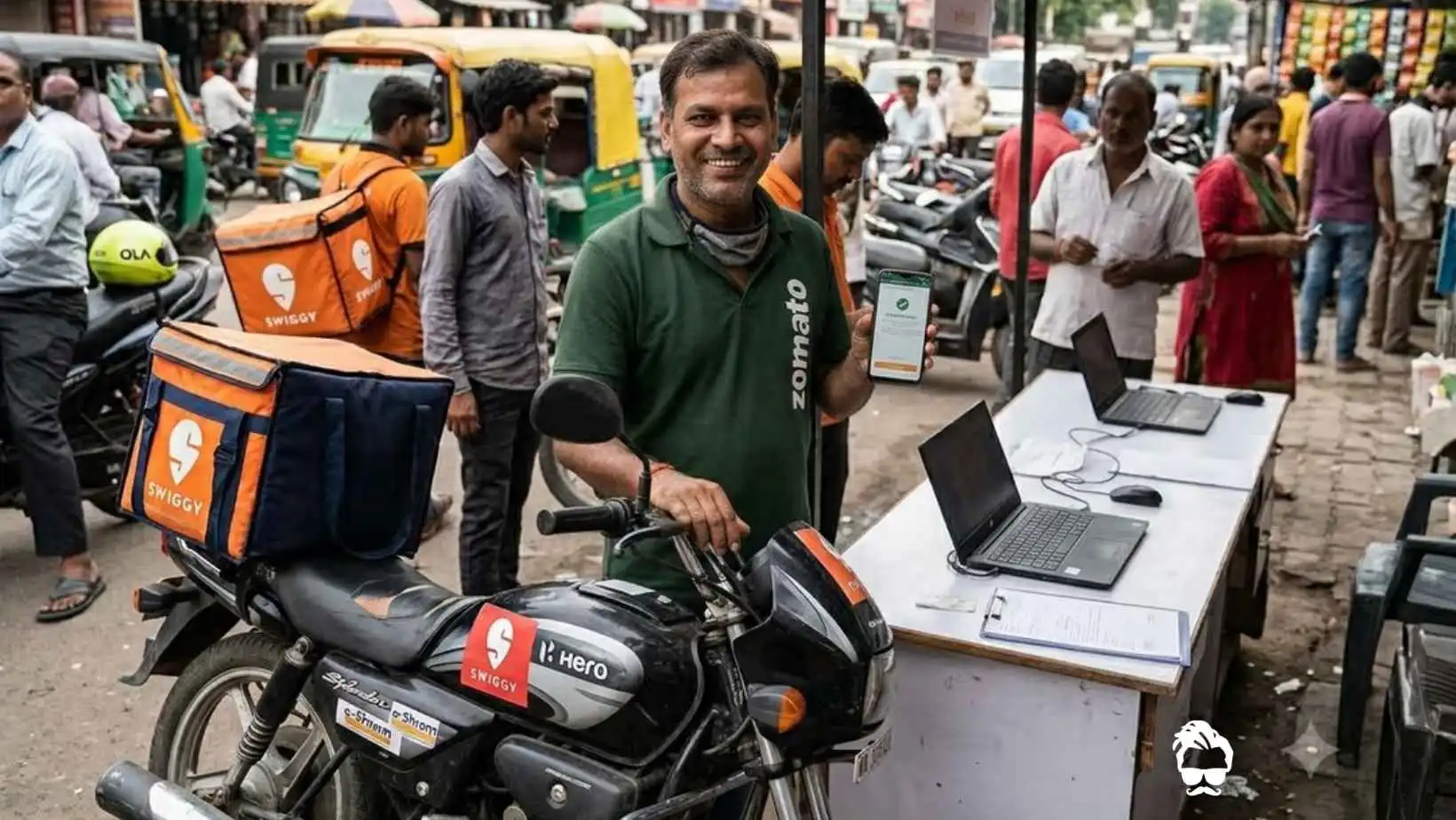
Millions of workers associated with app-based platforms such as Swiggy, Zomato, Blinkit, Uber, Ola, Rapido, Amazon, Zepto, Urban Company, and Porter may soon see greater benefits through the government’s e-Shram initiative.
The Ministry of Labour and Employment has directed digital aggregator companies to ensure that their gig and platform workers are registered on the e-Shram portal. The move is aimed at creating a comprehensive database of workers and improving the delivery of government welfare schemes.
With India’s gig economy expanding rapidly, authorities believe that bringing workers under a centralized system will help provide social security and targeted support in the future.
What Is the e-Shram Portal?
The e-Shram portal is a national database developed by the Government of India to maintain records of workers across different sectors, especially those in the unorganized workforce.
The main objective is to create a centralized system that allows the government to identify eligible workers and provide benefits more efficiently.
Key Features of e-Shram
- National worker database
- Unique identification number for registered workers
- Easier access to government welfare schemes
- Improved social security coverage
- Better policy planning through worker data
After successful registration, workers receive a unique e-Shram identification number that can be used for future government programs and services.
💼 Is your current occupation updated on your e-Shram profile?
— Ministry of Labour & Employment, GoI (@LabourMinistry) June 10, 2026
If not, update your Occupation Details today.
📲 A simple process that takes just a few minutes.
🌐 https://t.co/Qoj2e5MfOQ#MoLE #eShram pic.twitter.com/q0msQCRLrd
Government Directs Aggregator Platforms to Comply
According to the Labour Ministry, 15 major aggregator companies have already joined the e-Shram ecosystem.
These include platforms such as:
- Swiggy
- Zomato
- Blinkit
- Uber
- Ola
- Rapido
- Amazon
- Zepto
- Urban Company
- Porter
The ministry has instructed remaining companies to complete the process by June 21.
API Integration to Simplify Worker Registration
The government has also asked companies to connect their systems directly with the e-Shram portal through API integration.
This will allow worker information to be shared securely and efficiently, making registration and verification easier for both workers and platform companies.
Why This Matters
The integration could help:
- Reduce paperwork
- Improve worker identification
- Speed up welfare benefit delivery
- Ensure accurate worker records
- Strengthen social security coverage
What Benefits Could Gig Workers Receive?
The government says the initiative is designed to ensure that delivery partners, drivers, and other platform workers are officially recognized within government records.
Potential benefits include:
- Access to government welfare schemes
- Social security support
- Easier identification during emergencies
- Better inclusion in future labor policies
- Improved access to worker-focused programs
As India’s gig workforce continues to grow, policymakers see e-Shram as a critical step toward creating a stronger social protection framework.
How to Update Your Occupation on e-Shram
Workers who need to update their professional details can do so online through the e-Shram portal.
Steps to Update Occupation Details
- Visit the e-Shram portal.
- Select the “Update Your Occupation” option.
- Enter your registered mobile number.
- Verify your identity using the OTP received.
- Update your occupation details and supporting information.
- Upload any required documents.
- Review the information carefully.
- Submit the form.
Once verified, the updated information will be reflected in your e-Shram profile.
Final Takeaway
The government’s latest push to onboard gig workers onto the e-Shram platform marks a significant step toward formalizing India’s rapidly expanding gig economy. For delivery partners, drivers, and platform workers, registration could become increasingly important as future welfare programs and social security initiatives are linked to the national worker database.
Read in App ★ Free


