 Skip to content
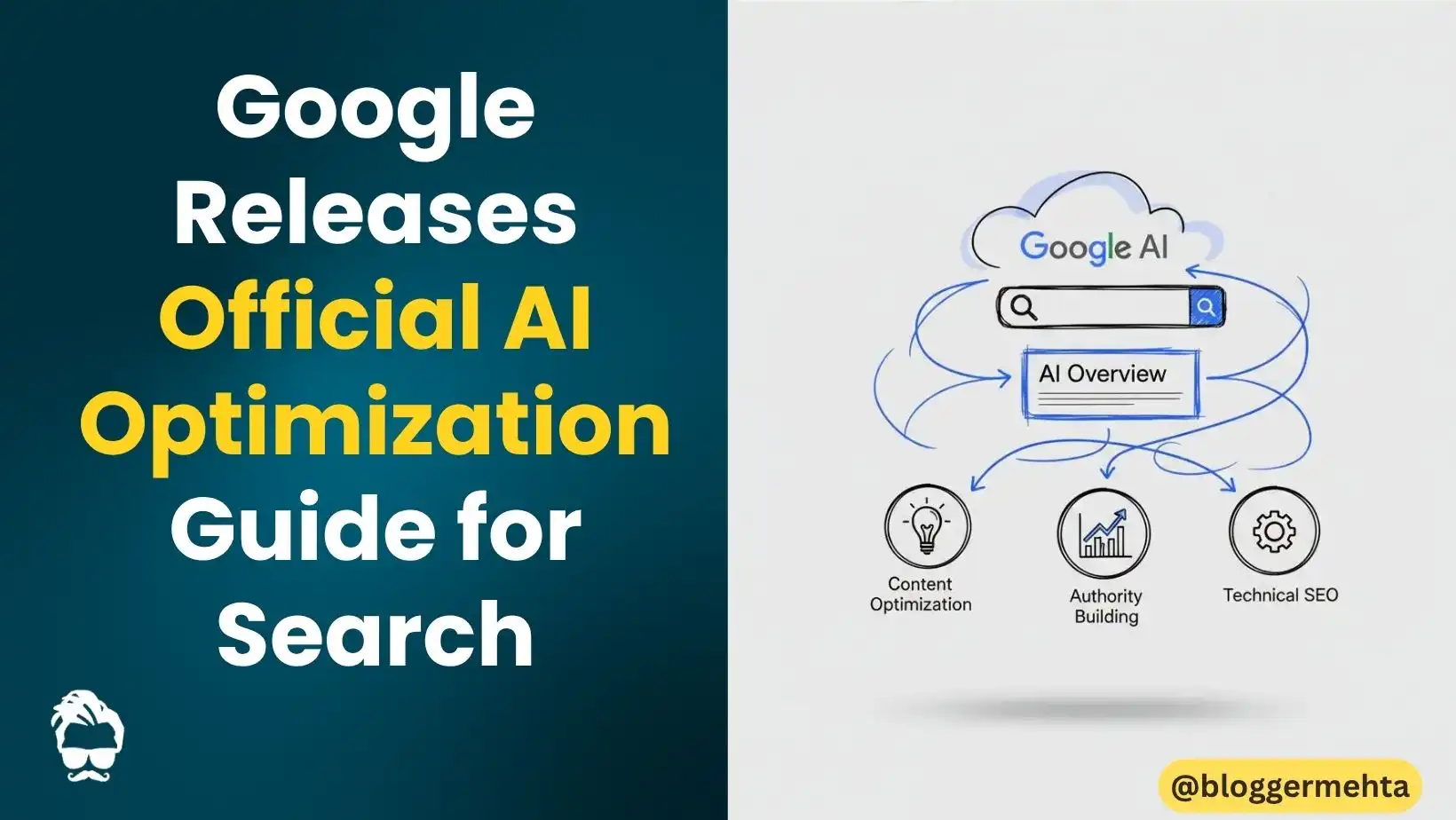
In a major move for the future of search, Google has officially published its first-ever guide on optimizing websites for generative AI experiences in Search, including AI Overviews and AI Mode.
The new documentation, published on Google Search Central, clarifies how website owners should think about SEO in the AI search era.
And the biggest takeaway?
Google says AI optimization is still fundamentally SEO.
What Is Google’s AI Optimization Guide?
The new guide explains how websites can improve visibility in:
- AI Overviews
- AI-powered search summaries
- AI Mode responses
- Generative search experiences
Google emphasizes that the same core principles that work for traditional SEO still matter for AI-powered search.
That includes:
- Helpful content
- Technical accessibility
- Strong page experience
- Clear site structure
- Original information
Google Says “GEO” and “AEO” Are Still SEO
Over the past year, new terms like:
- GEO (Generative Engine Optimization)
- AEO (Answer Engine Optimization)
have become popular in the SEO industry.
However, Google’s new documentation suggests that these concepts are not separate from SEO—they are simply extensions of traditional search optimization.
According to the guidance:
- AI systems still rely heavily on indexed web pages
- Crawlability and relevance remain critical
- Useful, original content is prioritized
Google Rejects Many Popular “AI SEO Tricks”
One of the most interesting parts of the guide is what Google says you do NOT need.
The company reportedly states that websites do not require:
- Special AI markup
- Artificial content chunking
- Markdown formatting tricks
llms.txtfiles for Google Search visibility
This is significant because many SEO tools and marketers have been heavily promoting llms.txt as a ranking factor for AI search systems.
Google’s position appears clear:
Normal SEO practices are still the foundation.
What Google Actually Recommends
Instead of shortcuts, Google focuses on:
- Technical crawlability
- Structured site architecture
- First-hand expertise
- Original insights
- Strong user experience
The company also highlights the importance of content that provides:
- Unique perspectives
- Non-commodity information
- Real expertise and experience
This aligns closely with Google’s long-term emphasis on E-E-A-T (Experience, Expertise, Authoritativeness, Trustworthiness).
AI Search Is Changing How Content Gets Discovered
Google’s AI-powered search systems increasingly use techniques like:
- Query fan-out
- Retrieval-Augmented Generation (RAG)
- Contextual synthesis
This means AI search can:
- Break complex questions into multiple subtopics
- Pull information from different sources
- Generate summarized answers dynamically
As a result, websites with:
- Deep topical authority
- Comprehensive content clusters
- Strong semantic coverage
may gain advantages in AI-powered search results.
AI Overviews Are Becoming More Important
Research suggests AI-generated answers are appearing more frequently in Google Search results.
A recent academic study found that AI Overviews appear for over half of many representative search queries and often appear above traditional organic listings.
This is changing how users interact with search results and how traffic is distributed across the web.
Does Google Use llms.txt?
One of the most discussed topics in the SEO industry has been llms.txt.
Google’s new guidance strongly suggests:
llms.txtis not required for Google AI Search visibility- Google does not rely on it for AI Overviews or AI Mode ranking decisions
However, some third-party AI systems may still experiment with it.
What Website Owners Should Focus on Now
✅ Best Practices for AI Search Optimization
- Publish original, experience-driven content
- Improve technical SEO and crawlability
- Build topical authority
- Structure content clearly
- Use descriptive headings and logical hierarchy
- Focus on solving user intent completely
- Maintain strong page performance and mobile usability
Final Thoughts
Google’s official AI Optimization Guide sends a strong message to the SEO industry:
👉 AI search does not replace SEO — it evolves it.
Despite growing hype around GEO, AEO, and AI-specific tactics, Google continues to emphasize that:
- Helpful content
- Technical accessibility
- Trust and expertise
- Strong SEO fundamentals
remain the keys to visibility in both traditional and AI-powered search.
As AI Overviews and AI Mode continue expanding, websites focused on real value—not shortcuts—are likely to perform best in the next generation of Google Search.
Read in App ★ Free


