 Skip to content
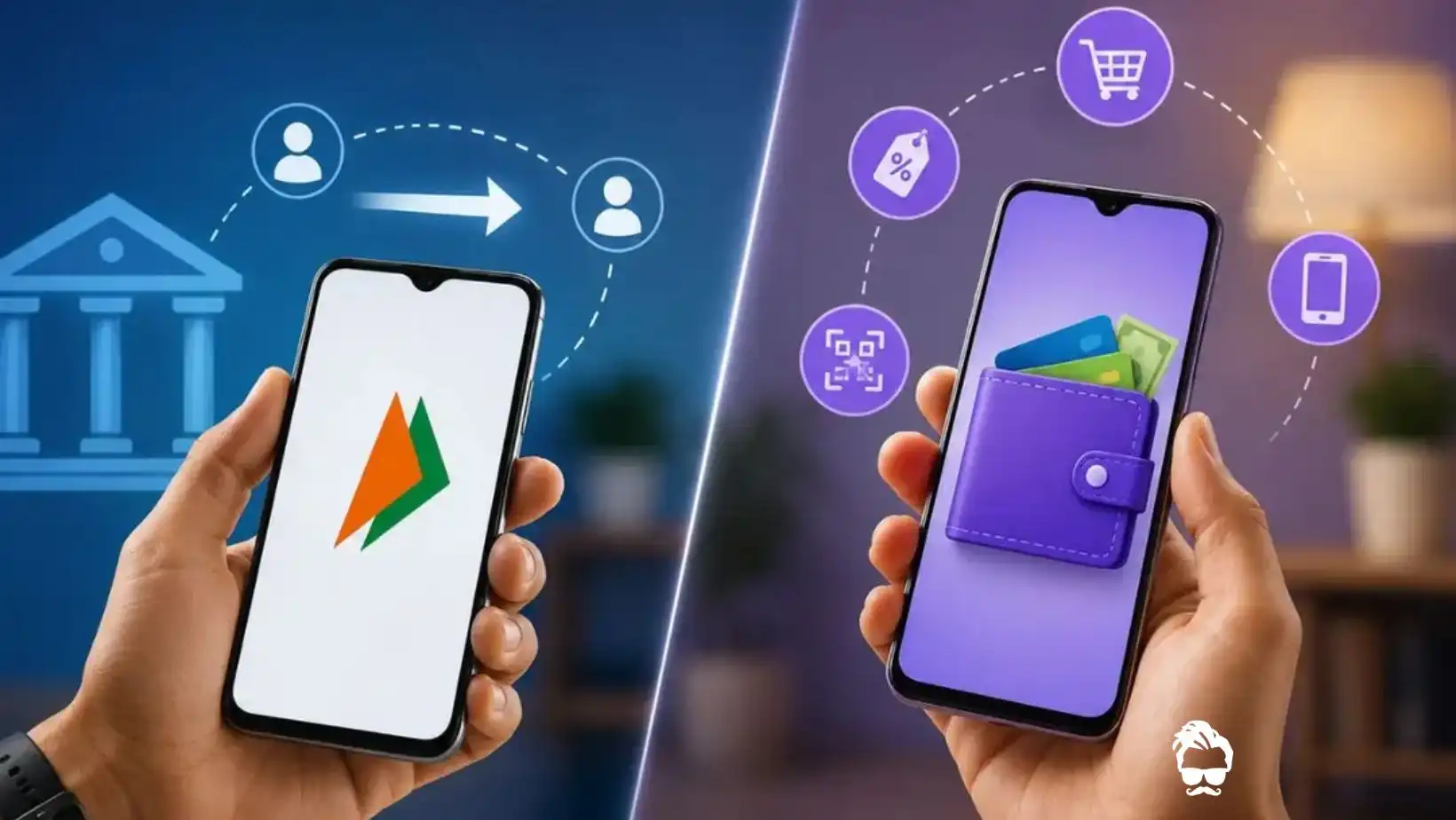
Recent updates to wallet-related policies by popular payment platforms have sparked fresh discussions among users about digital payments. One common misconception is that UPI and digital wallets are the same thing.
While both are widely used for online payments, shopping, food delivery, bill payments, and money transfers, they function in completely different ways.
Understanding how they work can help users make smarter and safer payment decisions.
What Is UPI?
UPI (Unified Payments Interface) is a real-time payment system that directly connects your bank account with another bank account.
Whenever you make a payment through UPI, the money moves instantly from your bank account to the recipient’s bank account.
How UPI Works
Bank Account → UPI → Merchant/Friend
The money remains in your bank account until you initiate a payment.
Common Ways to Pay Using UPI
- UPI ID
- QR Code
- Linked Mobile Number
- Bank Account Integration
Benefits of UPI
- Instant money transfer
- No need to preload funds
- Direct bank-to-bank transactions
- Widely accepted across India
- Easy account management
Think of UPI as a digital bridge that connects two bank accounts.
Also Read: Jio Launches New 4G Phone at Just ₹799 with UPI Support and Location Tracking
What Is a Digital Wallet?
A digital wallet is essentially a prepaid digital account where users store money before making payments.
Unlike UPI, you must first add money to the wallet before you can use it for transactions.
How a Wallet Works
Bank Account/Card → Wallet → Merchant/Friend
The money is transferred into the wallet first and then used for payments.
Ways to Add Money to a Wallet
- Bank account transfer
- Debit card
- Credit card
- Other supported payment methods
Benefits of Digital Wallets
- Quick payments from stored balance
- Useful for small and frequent transactions
- Promotional offers and cashback programs
- Easy spending management
A digital wallet works much like a physical wallet—you add money first and spend it later.
Also Read: After 5G, It’s Time for 6G – Jio Explains How It Will Transform the Internet World
Where Does Your Money Actually Stay?
In UPI
Your money stays in your bank account until you make a payment.
Flow:
Bank Account → UPI → Recipient
No separate balance needs to be maintained.
In a Wallet
Your money is stored inside the wallet after being loaded.
Flow:
Bank Account/Card → Wallet → Recipient
The balance remains in the wallet until it is spent.
UPI vs Wallet: Key Differences
| Feature | UPI | Digital Wallet |
|---|---|---|
| Money Storage | Bank Account | Wallet Balance |
| Need to Add Funds First? | No | Yes |
| Transaction Type | Direct Bank Transfer | Wallet-Based Payment |
| Speed | Instant | Instant |
| Bank Account Required | Yes | Usually Required for Loading Funds |
| Balance Management | Automatic | Manual Top-Up Needed |
| Popular Use | Everyday Payments | Small Frequent Transactions |
Which Option Is Better?
The answer depends on how you use digital payments.
Choose UPI If You Want:
- Direct access to your bank account
- No need to maintain separate balances
- Seamless money transfers
- Simpler financial tracking
Choose a Wallet If You Want:
- Dedicated spending balance
- Cashback and rewards
- Budget control for daily expenses
- Faster access to stored funds
Can You Use Both Together?
Yes. Many users combine both payment methods.
For example:
- Use UPI for larger payments and bank transfers.
- Use a wallet for food delivery, subscriptions, transportation, and cashback offers.
This approach offers convenience while maximizing benefits from both systems.
Final Takeaway
UPI and digital wallets may look similar from a user’s perspective, but they operate very differently. UPI directly connects bank accounts and transfers money instantly, while wallets act as prepaid digital accounts that store funds before payments are made.
As digital payments become an essential part of everyday life, understanding these differences can help users choose the right payment option based on convenience, spending habits, and financial preferences.
Read in App ★ Free