 Skip to content
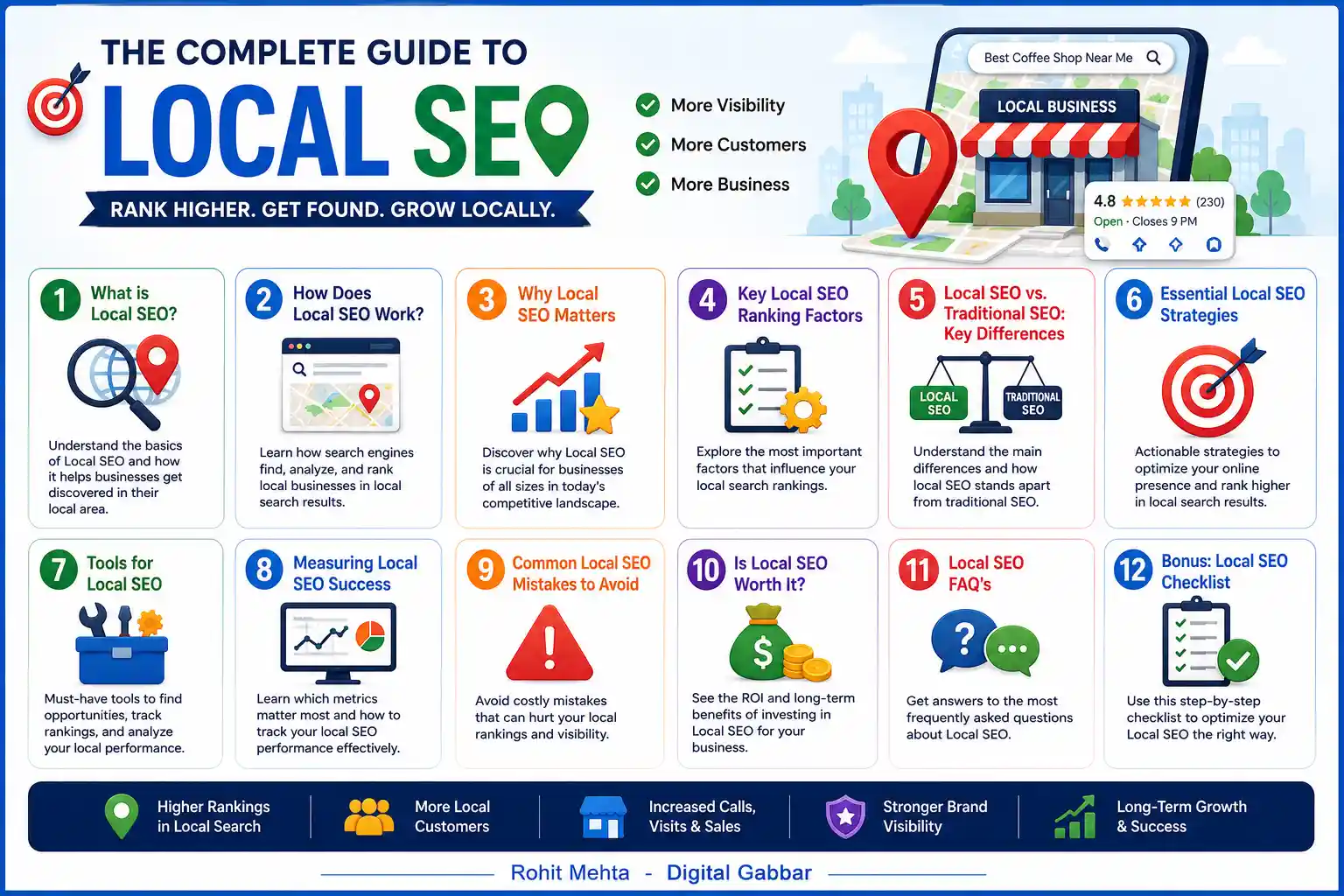
If you’ve ever searched for “coffee shop near me” or “best plumber in [your city],” you’ve experienced local SEO in action. Let’s break down exactly what local SEO is and why it matters for your business.
Contents
What is Local SEO?
Local SEO (Search Engine Optimization) is the process of optimizing your online presence to attract more business from relevant local searches. It’s about making sure that when people in your area search for products or services you offer, your business shows up prominently in the results.
Think of it this way: Traditional SEO focuses on ranking well globally or nationally, while local SEO focuses on ranking well in specific geographic locations.
How Does Local SEO Work?
Local SEO works through three main components:
1. Google Business Profile (formerly Google My Business)
This is Google’s free business listing service that appears in Google Maps and local search results. Your Business Profile includes:
- Business name, address, and phone number (NAP)
- Business hours
- Photos and videos
- Customer reviews
- Categories and services
2. Local Organic Rankings
These are the traditional search results that Google localizes based on:
- Your location
- Search terms
- Relevance to your query
3. Local Pack/Map Pack
Those 3 businesses that appear at the top of search results with a map? That’s the local pack, and getting featured there can dramatically increase visibility.
Why Local SEO Matters
Here’s why local SEO should be on your radar:
- 46% of all Google searches are looking for local information
- 78% of local mobile searches result in an offline purchase
- 28% of searches for something nearby result in a purchase
- Local searches lead to higher conversions – people searching locally are often ready to buy
Key Local SEO Ranking Factors
Google considers multiple factors when ranking local businesses:
Proximity
How close your business is to the searcher’s location (or the location they’re searching for).
Prominence
How well-known your business is. This includes:
- Reviews and ratings
- Backlinks from local sources
- Mentions across the web
- Overall online authority
Relevance
How closely your business matches what the searcher is looking for. This includes:
- Business categories
- Services offered
- Website content
- Reviews mentioning relevant keywords
Local SEO vs. Traditional SEO: Key Differences
| Aspect | Local SEO | Traditional SEO |
|---|---|---|
| Target Audience | Geographic-specific | Broader audience |
| Search Intent | Often transactional | Informational to transactional |
| Key Platforms | Google Maps, Google Business Profile | Traditional search results |
| Ranking Factors | Proximity, reviews, citations | Content quality, backlinks, technical SEO |
| Competition | Local businesses only | Global/national competitors |
Essential Local SEO Strategies
1. Optimize Your Google Business Profile
- Claim and verify your listing
- Fill out every section completely
- Add high-quality photos regularly
- Get and respond to reviews
- Use Google Posts for updates
2. Build Local Citations
Ensure your business name, address, and phone number (NAP) are consistent across:
- Online directories
- Review sites
- Local business associations
- Industry-specific directories
3. Get Local Reviews
- Encourage satisfied customers to leave reviews
- Respond to all reviews (positive and negative)
- Make it easy for customers to review you
4. Create Local Content
- Write about local events, news, or topics
- Create location-specific landing pages
- Highlight local case studies or testimonials
5. Build Local Backlinks
- Partner with other local businesses
- Sponsor local events
- Join local business organizations
- Get featured in local media
6. Mobile Optimization
- Ensure your site works perfectly on mobile
- Include click-to-call buttons
- Make address and hours easy to find
Tools for Local SEO
- Google Business Profile – Free management tool
- BrightLocal – Citation building and tracking
- Whitespark – Local citation builder
- Moz Local – Local listing management
- SEMrush – Local rank tracking and optimization
Measuring Local SEO Success
Track these metrics to gauge your local SEO performance:
- Google Business Profile insights (views, clicks, calls)
- Local keyword rankings
- Review quantity and quality
- Website traffic from local searches
- Conversion rates from local traffic
- Physical visits (with location tracking)
Common Local SEO Mistakes to Avoid
- Inconsistent NAP information across platforms
- Ignoring reviews (both positive and negative)
- Not optimizing for mobile users
- Forgetting to use location-specific keywords
- Neglecting local content creation
- Not tracking local SEO performance
- Keyword stuffing in business titles or descriptions
Is Local SEO Worth It?
If you have a physical location or serve a specific geographic area, local SEO isn’t just worth it—it’s essential.
Consider these stats:
- 72% of consumers who did a local search visited a store within five miles
- Local searchers are 50% more likely to convert
- One in two people who conduct a local search on their phone visit a store within a day
The bottom line? Local SEO connects you with customers who are actively looking for businesses like yours in your area. When done right, it can drive foot traffic, phone calls, and sales—often with a better ROI than traditional advertising.
Ready to improve your local SEO? Start with claiming and optimizing your Google Business Profile—it’s the single most important step you can take.
Local SEO FAQ’s
What is Local SEO in simple terms?
Local SEO is the practice of optimizing your online presence so your business shows up when people in your geographic area search for products or services you offer. Instead of competing globally, you’re focusing on customers in your city, neighborhood, or service area.
How is Local SEO different from regular SEO?
Traditional SEO focuses on ranking well across broader regions or globally, while local SEO targets specific geographic locations. Local SEO also heavily emphasizes factors like Google Business Profile, customer reviews, and physical proximity to searchers.
Why is Local SEO important for small businesses?
Local SEO levels the playing field. It helps small businesses compete with larger companies by focusing on their immediate area, where they have natural advantages like proximity and local reputation. Plus, local searchers are often ready to buy—78% of local mobile searches result in offline purchases.
How much does Local SEO cost?
Costs vary widely:
1. DIY approach: Free (just your time)
2. Basic services: $300-500/month
3. Professional services: $500-2,000/month
4. Comprehensive packages: $2,000+/month
Many local businesses see ROI within 3-6 months when done properly.
What is Google Business Profile and why is it important?
Google Business Profile (formerly Google My Business) is Google’s free business listing service that appears in Google Maps and local search results. It’s the single most important local SEO tool—without it, your business likely won’t appear in local search results at all.
How do I claim my Google Business Profile?
1. Go to google.com/business
2. Search for your business
3 .Click “Claim this business”
4. Verify your ownership (usually by postcard, phone, or email)
5 .Complete your profile information
The verification process typically takes 1-2 weeks.
Why won’t my Google Business Profile show up in search results?
Common reasons include:
• Incomplete profile information
• Inconsistent NAP (name, address, phone) across the web
• Lack of reviews or photos
• Suspended or unverified listing
• Google spam filters flagging your business
Can I have multiple Google Business Profile listings?
Only if you have:
• Multiple physical locations (each gets its own listing)
• Different service areas for each location
• Legitimate, distinct businesses at each address
Creating multiple listings for the same location violates Google’s guidelines and can result in suspension.
How long does Local SEO take to work?
Generally:
• Initial results: 1-3 months
• Significant improvement: 3-6 months
• Full impact: 6-12 months
Google Business Profile optimizations can show results faster, while building local authority takes longer.
What are the most important Local SEO ranking factors?
The big three are:
1.Proximity: How close you are to the searcher
2. Relevance: How well you match what they’re searching for
3. Prominence: How well-known and trusted your business is
Other important factors include reviews, citations, backlinks, and website optimization.
Can I rank for Local SEO without a physical address?
Yes, but it’s harder. Service-area businesses (SABs) can rank by:
• Setting up a service area in Google Business Profile
• Building strong local content
• Getting customer reviews
• Building local authority
However, businesses with physical addresses generally have an advantage.
How important is mobile optimization for Local SEO?
Critical. Over 60% of local searches happen on mobile devices. If your site doesn’t work well on mobile, you’re likely losing most of your local search traffic.
How do I calculate Local SEO ROI?
Basic ROI formula: (Revenue from Local SEO - Cost of Local SEO) ÷ Cost of Local SEO × 100
For example, if you spent $1,000 on local SEO and generated $5,000 in revenue from those efforts: ($5,000 - $1,000) ÷ $1,000 × 100 = 400% ROI
Track revenue sources carefully to attribute correctly.
Read in App ★ Free