 Skip to content
Remember when SEO meant stuffing keywords and hoping for the best? Those days are long gone, but honestly? They never really left. And now Google just made it painfully obvious.
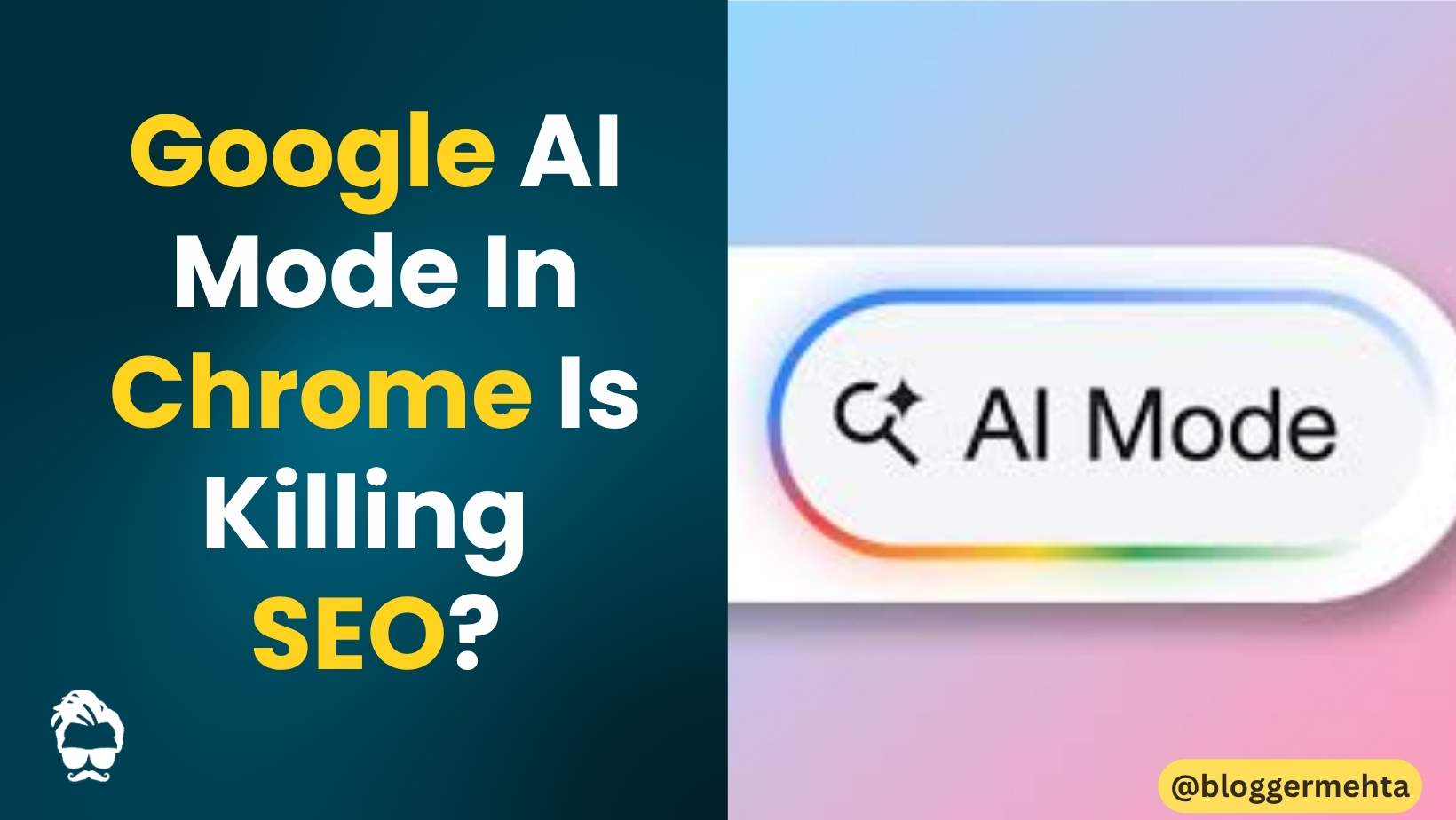
On April 16, 2026, two big-shot VPs from Google – Robby Stein (Search) and Mike Torres (Chrome) – dropped news about AI Mode in Chrome. Their pitch? “Access and engage with content and dive deeper into what you find, all without losing your place or needing to switch tabs.”
Sounds cool, right? Just another shiny feature?
Wrong.
This is a wake-up call hiding inside a product update.
So What’s Actually Changed?
Here’s the deal. Previously, search worked like this: You type something → Google shows you links → You click one → You discover stuff.
Simple. Linear. The click was the starting point.
Now? AI Mode flips the whole thing. Users get their answer from Google’s AI, stay right there in the same interface, open multiple websites side-by-side, ask follow-up questions, and keep digging – without ever really “leaving” Google’s world.
So what does the click mean now?
It means verification.
The user already has their answer. They’re clicking your site to confirm, to dig deeper, or to see if you’re worth their time. That’s a completely different ballgame.
Also Read: How Google Selects Canonical URLs: 9 Key Factors Explained by Google
The Numbers Don’t Lie
Let me throw some stats at you – and they’re not pretty:
- Index Exchange found that 69% of publishers watched their ad opportunities decline in 2025. Average drop? 14%. Ouch.
- Ahrefs dropped a bomb in February 2026: AI Overviews are now linked to a 58% drop in click-through rates for top-ranking pages. That’s nearly double the 34.5% decline from just a year earlier.
Think about that. You could be ranking #1 and still getting fewer clicks than page 5 did two years ago.
And now AI Mode adds side-by-side viewing into the mix. This isn’t Google being nice to publishers. This is a fundamental shift in what a “click” even means.
AI Mode Is Basically A Stress Test
Here’s something every SEO needs to hear: Google isn’t killing SEO. They’re just making bad SEO impossible to hide.
If your content is thin, generic, or just rehashed stuff everyone’s already written – AI Mode shines a bright light on that weakness. But if you’ve got original, helpful, well-structured content? Congratulations. AI Mode just gave you more opportunities to show up at exactly the right moment.
Rand Fishkin (yeah, the Moz guy) wrote something on April 20, 2026 that hit hard. He talked about “the great traffic apocalypse of 2024-2026” and analyzed 400 websites that actually survived. His finding? There are 5 things every surviving site had in common:
- Unique product or service – Something nobody else offers
- Task completion – Users can actually get stuff done
- Proprietary assets – Data or tools only you have
- Tight topical focus – You’re the go-to source for something specific
- Strong brand – People come to you, not just your content
Fishkin put it blunt: “No amount of tactical excellence can save you” if your business model is something AI can easily replace.
So let me ask you this – does your site offer something AI can’t just summarize in one paragraph? If not, you’ve got work to do.
The Open Web Isn’t Dead – Yet
I know, I know. Everyone’s screaming “Google is eating the web!” And sure, there’s reason to worry. But here’s the interesting part: AI Mode’s side-by-side design actually proves Google still needs us.
The announcement mentioned that early testers liked having “Search and the web side-by-side” because it “helped them stay focused on their tasks while exploring useful webpages.”
Translation: Google wants to guide the journey, but they still need real websites to send people to.
The sites that will actually benefit? The ones offering:
- Original reporting (not the same news everyone else has)
- Proprietary data (your own research, surveys, numbers)
- Firsthand experience (real stories, real results)
- Strong analysis (what does this actually mean?)
- A genuine point of view (tell me something I haven’t heard)
Fishkin’s example: Letterboxd. Movie review sites got destroyed by AI Overviews. But Letterboxd survived because it offers something unique – user-generated data showing movie popularity over time. You can’t get that from ChatGPT. That’s value AI can’t flatten.
What You Should Do Starting Today
Look, I’m not here to scare you. I’m here to get you ready. Here’s what matters now:
Your Content Needs To:
- Answer fast – If someone can’t get what they need in 3 seconds, you’re out
- Be structured – Use headings, bullet points, clear formatting
- Be worth citing – Give specific data, unique insights, real examples
- Stand out – What makes you different from 100 other pages on the same topic?
- Build trust – Show expertise, back up claims, be credible
Your Metrics Need To Change Too
Here’s the uncomfortable truth: Last-click attribution is becoming fake. If someone finds you through AI Mode, researches for three days, and finally converts – you’re not getting credit if you’re only looking at the final click.
Time to start paying attention to:
- Assisted conversions
- Brand demand
- Influence across channels
SEO isn’t just about traffic anymore. It’s about being part of the journey.
Final Thoughts
Google AI Mode isn’t the enemy. It’s a filter.
It’s filtering out everything that’s lazy, generic, and purely designed to trick algorithms. And it’s rewarding everything that’s genuinely useful, original, and built on real expertise.
The websites that will thrive in this new world aren’t the ones with the best SEO tricks. They’re the ones that actually have something valuable to offer.
So here’s my question for you: Is your content worth clicking on when the user already has their answer?
If yes, you’re going to do great.
If no, you know what to fix.
Read in App ★ Free


