 Skip to content
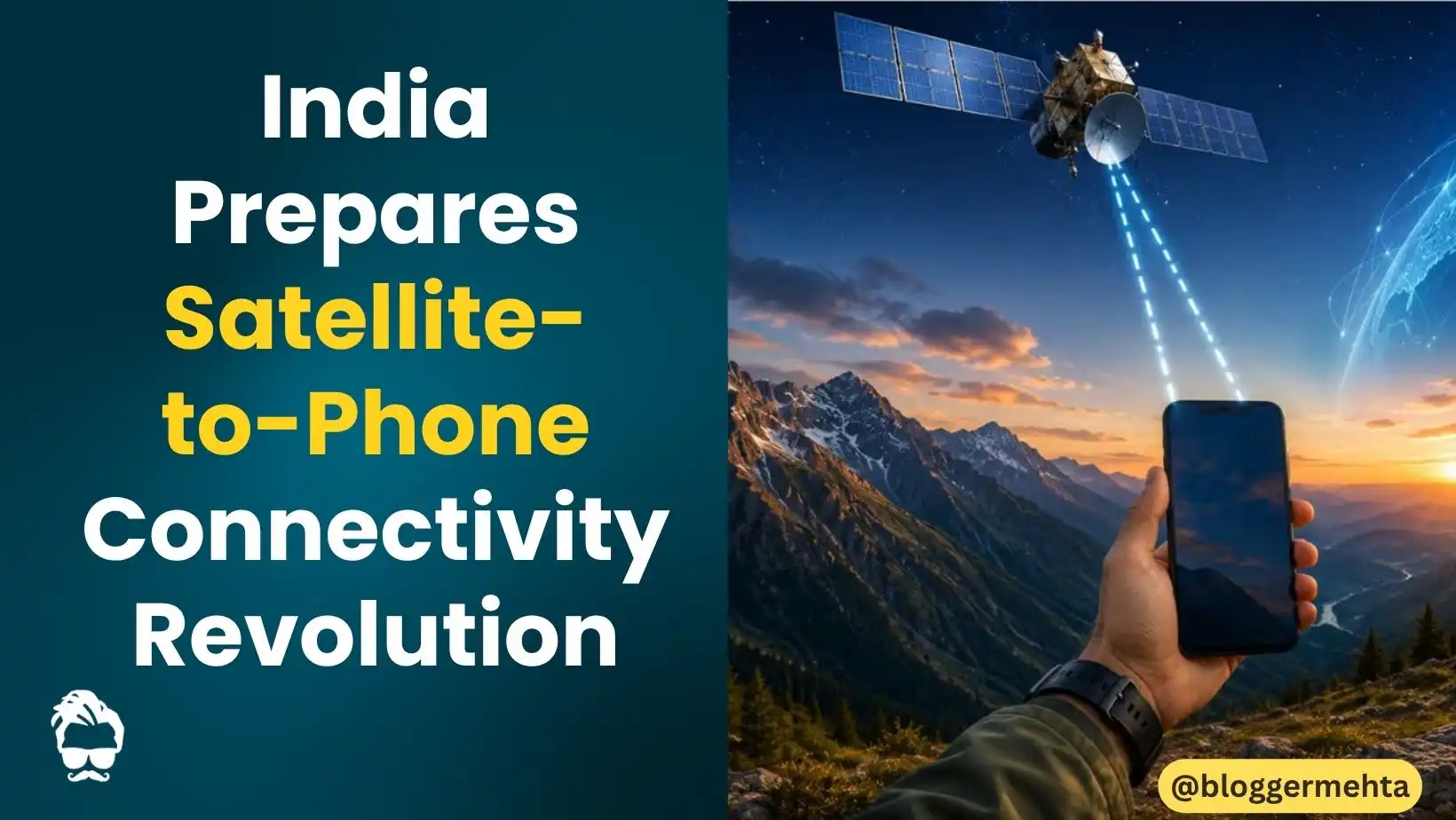
India is preparing for a major technological transformation that could finally solve one of the country’s biggest connectivity problems — poor mobile network coverage in remote areas.
The government and tech industry are actively exploring Direct-to-Device (D2D) satellite communication technology, which would allow smartphones to connect directly with satellites in space instead of relying only on mobile towers.
If implemented successfully, users may soon get network access even in:
- Mountains
- Dense forests
- Border areas
- Sea regions
- Remote villages
What Is Direct-to-Device (D2D) Satellite Connectivity?
D2D satellite technology enables smartphones to communicate directly with satellites orbiting Earth.
Unlike traditional mobile networks that depend on telecom towers, this system works from space, helping provide connectivity in locations where building infrastructure is difficult or impossible.
The biggest advantage:
Even if there’s no mobile tower nearby, your phone could still receive signal through satellites.
Google and Apple Also Interested
Global technology companies are already paying close attention to satellite communication.
According to reports:
- Google and Apple have urged the Indian government to establish clear regulations for satellite-based smartphone services.
- Companies want a proper framework for:
- Emergency messaging
- Satellite-enabled features
- User safety standards
- Reliable communication protocols
This could pave the way for future smartphones with built-in satellite communication support in India.
A Potential Lifesaver During Emergencies
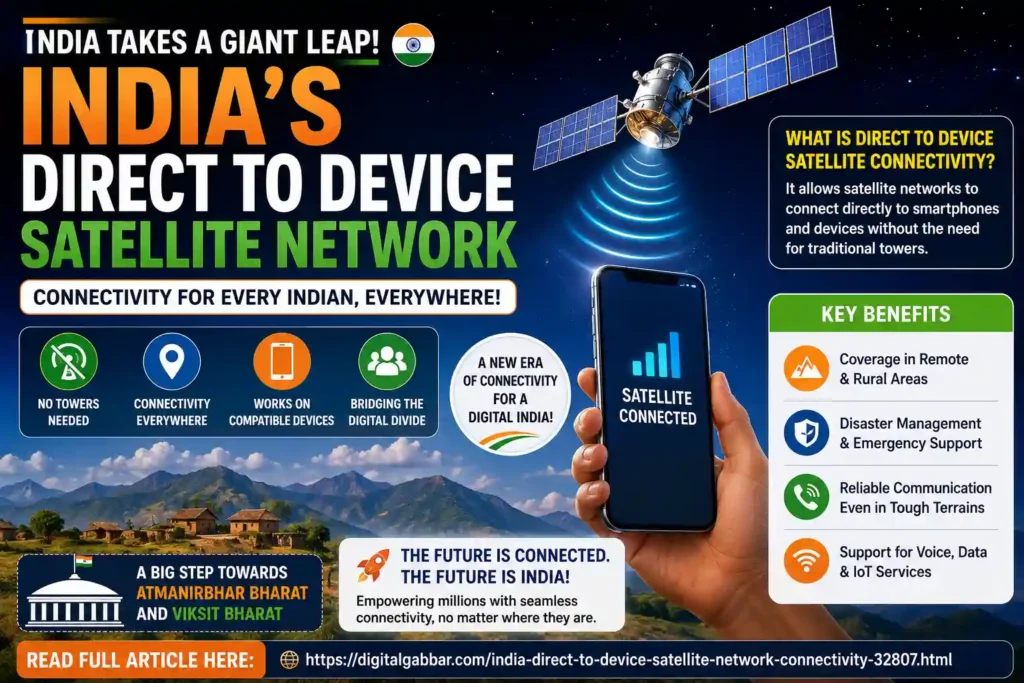
One of the biggest advantages of satellite connectivity is its role during emergencies.
In situations such as:
- Natural disasters
- Mountain accidents
- Jungle emergencies
- Network outages
Users could still send SOS alerts or contact emergency services through satellites.
This feature has the potential to save lives, especially in areas where traditional networks completely fail.
Challenges India Still Needs to Solve
While the technology sounds revolutionary, there are still major technical challenges.
1. Battery Consumption
Satellite communication requires more power than standard mobile towers.
This means:
- Faster battery drain
- Higher energy consumption during emergency connectivity
2. Smartphone Design Limitations
Modern smartphones are becoming:
- Thinner
- Lighter
- More compact
However, satellite connectivity may require:
- Larger antennas
- Stronger signal hardware
Tech companies are currently working on balancing performance with slim smartphone designs.
India’s Next Big Digital Infrastructure Move
India has been rapidly strengthening its digital infrastructure, and satellite-based mobile connectivity could become the next major milestone.
Experts believe the technology could transform:
- Rural communication
- Disaster management
- Defense operations
- Adventure travel
- Maritime communication
If development continues at the current pace, the phrase “No Network” may soon become far less common in India.
Why This Technology Matters
For millions of Indians living or traveling in low-network regions, D2D satellite connectivity could:
- Improve safety
- Expand internet access
- Enable emergency communication
- Reduce dependence on telecom towers
The future of mobile networks may no longer be on the ground — but in space.
Read in App ★ Free