 Skip to content
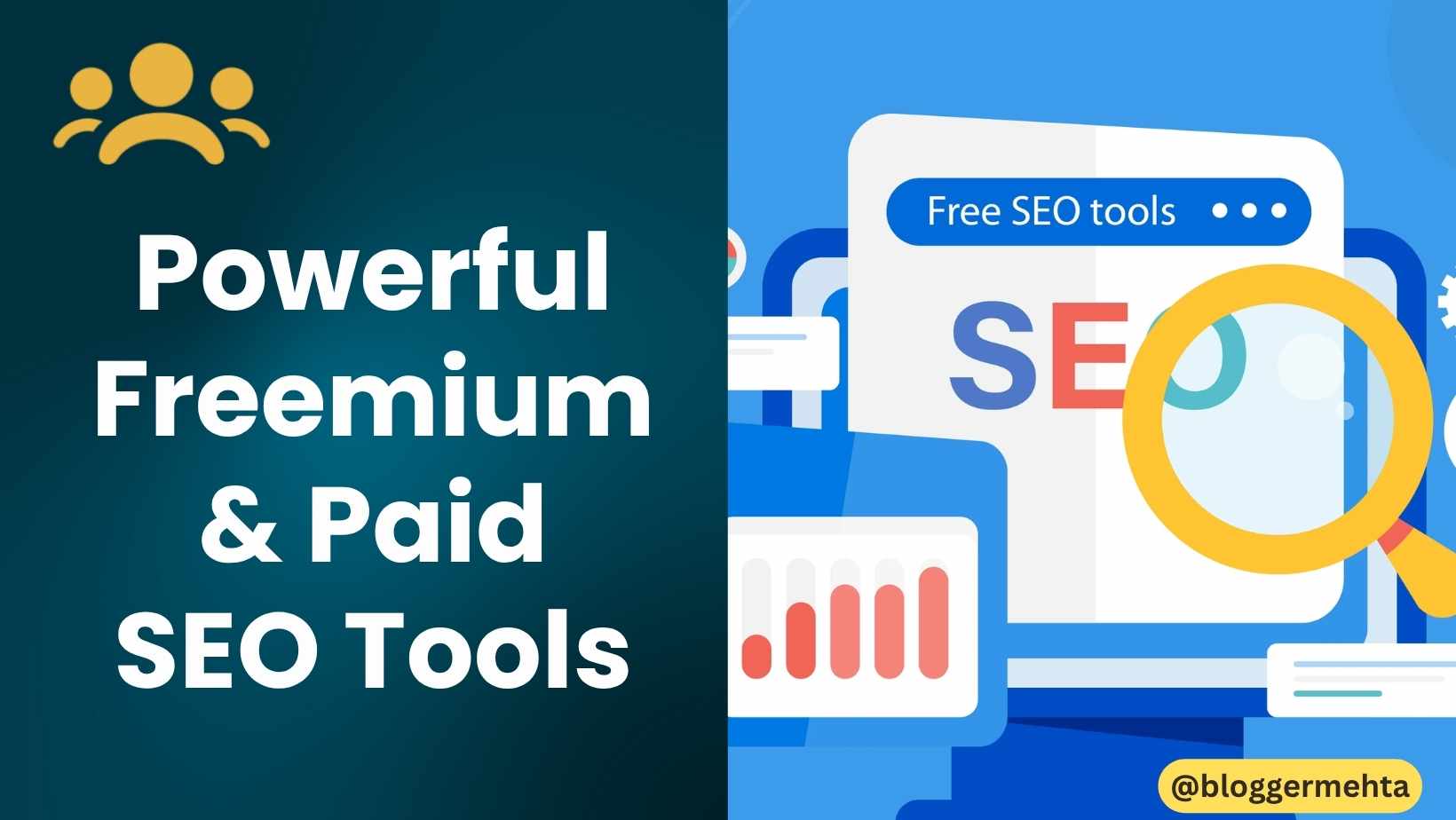
In the competitive world of blogging, working smart is no longer a luxury—it’s a necessity. The right Search Engine Optimization Tools can be the difference between a blog that struggles and one that thrives. These tools analyze your site, uncover hidden opportunities, and provide actionable insights to skyrocket your organic traffic.
As a full-time blogger, I use a curated suite of these tools daily. This list is a compilation of my essential Search Engine Optimization Tools, from free powerhouses to premium power-ups, that will help you optimize your blog for success in 2025.
Contents
The Essential Free Search Engine Optimization Tools
1. Google Analytics 4 (GA4)
Google Analytics remains the undisputed king of data. The current version, GA4, is built for a privacy-focused, cross-platform world. It goes beyond simple pageviews, giving you a deep understanding of your audience’s journey, from acquisition to engagement and conversion.
- Why It’s Essential: Tracks user behavior, measures traffic sources, and identifies your best-performing content. It’s the ultimate tool for understanding your audience.
- Best For: Comprehensive user journey tracking and conversion measurement.
- Price: Free
2. Google Search Console
This is arguably the most critical free tool in any blogger’s arsenal. Google Search Console is your direct line of communication with the world’s largest search engine. It shows you how Google sees your site.
- Why It’s Essential: Monitor your indexing status, see which queries bring you traffic, identify crawl errors, and understand your site’s performance in search results.
- Best For: Technical SEO health, keyword performance data, and indexing management.
- Price: Free
3. PageSpeed Insights / GTmetrix
With Core Web Vitals as official ranking factors, site speed is non-negotiable. Both these Search Engine Optimization Tools analyze your loading times and provide specific recommendations for improvement.
- Why It’s Essential: Pinpoints exactly what is slowing down your blog (e.g., large images, render-blocking code, slow server) and offers actionable fixes.
- Best For: Performance optimization and improving user experience.
- Price: Free (Both have paid tiers for advanced monitoring)
4. Google Trends
For bloggers in trending niches or anyone looking to create timely content, Google Trends is invaluable. It reveals the popularity of search queries over time and across different regions.
- Why It’s Essential: Discover rising trends and seasonal topics before they peak, allowing you to create content that captures search volume.
- Best For: Content ideation and capitalizing on viral topics.
- Price: Free
5. Ubersuggest / Semrush Free Account
While Semrush is a premium tool, it offers a generous free account with daily query limits. For a fully free alternative, Ubersuggest (by Neil Patel) is a robust option. Both help you find keywords your audience is searching for.
- Why It’s Essential: Uncover keyword ideas, see search volume estimates, and analyze competitor domains at a basic level.
- Best For: Beginner-friendly keyword research and competitor gap analysis.
- Price: Freemium (Free plans available)
Powerful Paid Search Engine Optimization Tools
6. Semrush
Semrush is an all-in-one SEO suite and a favorite among digital marketers. It’s like a Swiss Army knife for SEO, offering tools for keyword research, rank tracking, site auditing, backlink analysis, and more.
- Why It’s Essential: Its breadth and depth are unparalleled. You can spy on competitor strategies, find untapped keyword opportunities, and conduct deep technical site audits.
- Best For: All-in-one competitive analysis and comprehensive SEO management.
- Price: Paid (Offers a 7-day free trial for the Pro plan)
7. Ahrefs
If backlinks are your primary focus, Ahrefs is the industry leader. Its backlink index is massive and incredibly accurate. Beyond links, it also boasts a powerful keyword explorer and a robust site audit tool.
- Why It’s Essential: For in-depth backlink analysis, discovering your competitors’ link sources, and monitoring your own link profile’s health.
- Best For: Backlink analysis and advanced keyword research.
- Price: Paid (Offers a limited $7 trial for one week)
8. Moz Pro
Moz, founded by Rand Fishkin, is one of the most trusted names in SEO. Its Pro suite includes keyword research, rank tracking, site crawl, and link analysis. Its Domain Authority (DA) and Page Authority (PA) metrics are widely used as benchmarks.
- Why It’s Essential: Excellent for comprehensive SEO campaigns, from on-page optimization to link building. The MozBar Chrome extension is incredibly useful for quick analysis.
- Best For: Holistic SEO campaign management and metric benchmarking.
- Price: Paid
9. Surfer SEO
This tool uses AI to analyze the top-ranking pages for your target keyword and gives you a detailed “Content Score” checklist. It suggests optimal keyword usage, content length, and structure to help you create SEO-optimized content.
- Why It’s Essential: Data-driven content creation. It takes the guesswork out of on-page SEO and helps you write what search engines and users want to see.
- Best For: On-page optimization and data-driven content writing.
- Price: Paid
Final Words
Building a successful blog is a marathon, not a sprint. The right Search Engine Optimization Tools act as your training regimen, coach, and GPS, guiding you toward the finish line of high rankings and sustainable traffic.
Start with the free tools, master them, and gradually level up as your blog grows. Remember, a tool is only as good as the person wielding it. Use these insights to take consistent, informed action.
I hope this 2025 guide helps you discover powerful Search Engine Optimization Tools to propel your blog to new heights. If you found it helpful, please share it with your fellow bloggers.
Best of luck
FAQs About Search Engine Optimization Tools
Are free Search Engine Optimization Tools good enough for a new blogger?
Absolutely. Starting with free tools like Google Search Console, Google Analytics, and Ubersuggest is a perfect strategy. They provide more than enough data to make significant improvements. As your blog grows and your revenue increases, you can then invest in premium Search Engine Optimization Tools.
What is the single most important SEO tool I should use?
For most bloggers, Google Search Console is the most critical. It provides direct, unfiltered data from Google on how your site is performing in search results, what’s working, and what needs to be fixed.
What’s the main difference between Semrush and Ahrefs?
While both are excellent all-in-one platforms, they have different strengths. Semrush is often praised for its breadth of features, including advertising and social media tools. Ahrefs is traditionally known for its superior backlink index and analysis. Many professionals use both, but for bloggers, either is a fantastic choice.
How often should I use these SEO tools?
It depends on the tool:
Google Analytics/Search Console: Check weekly.
Rank Trackers (in Semrush/Moz): Check weekly.
Site Auditors (in Semrush/Ahrefs/Moz): Run a full crawl monthly or after major site updates.
Keyword Research Tools: Use them for every new piece of content you plan.
Can I rely solely on AI-powered SEO tools like Surfer SEO?
AI-powered Search Engine Optimization Tools are fantastic for guidance and ensuring technical on-page optimization. However, they should not replace human creativity and expertise. Use them to structure and optimize your content, but always prioritize writing for a human audience first. Quality and E-E-A-T (Experience, Expertise, Authoritativeness, Trustworthiness) are paramount.
Read in App ★ Free